Thursday, April 25, 2013

Can we do it all in Catanduvas?

Time stops for no one - including GSE - so after only 24 hours in Fraiburgo, it was time to say goodbye, load our luggage and board the bus, and head 2 hours west to Catanduvas.  The city is a small town with only 10,000 inhabitants, but its economy is very diversified.  There are 50 different industries in Catanduvas, with an emphasis on erva mate production and Brasil Foods (BRF).

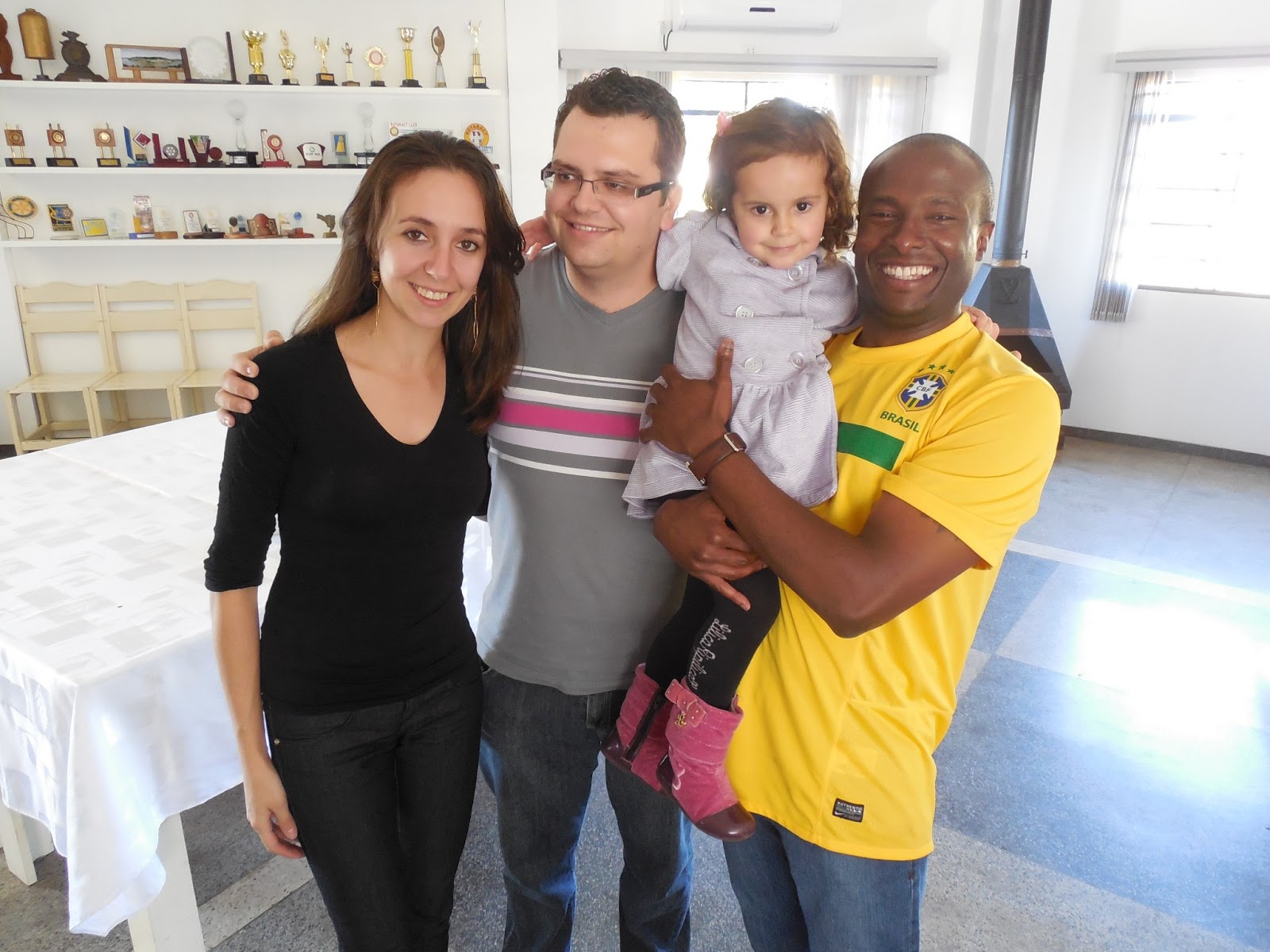
Our Fraiburgo host families
A full van... is there room for us?
The center of Catanduvas (sort of like Atlanta's big chicken)

After storing our (many!) bags, we all headed to the BRF factory, which produces poultry feed.  There are 2 different duck feed products and 5 different chicken feed products, each specialized for a specific times in the bird's lifespan.  BRF produces 2,500 tons/day, which is immediately transported out to the farmers contracted  by BRF to grow and take care of the chickens and can store and additional 1,700 tons.  The company is incredibly important to this region, as it provides transport, fuel, production, hotels, and other economic opportunities. Nearly 80% of the final product is exported outside the country.

Lunch was an early highlight of the day, as Sofie taught us how to make caipirinhas.  Drinks for lunch?  Yes, please!

Adding sugar to the mulled limes
Taste test!

Post-lunch, we presented the Catanduvas Rotary Club with our banners, and we were honored to learn this was the club's very first banner exchange!  Rotary Catanduvas was founded last year, after the original club folded about 10 years ago.  The average age of its 21 members is 33 which reflects the club's youth, and only 1 member was/is a member of both clubs.

Banner exchanges

Continuing our poultry education, we then went to a chicken farm which is contracted by BRF for egg production   We saw eggs being prepared for incubation, and then moved to the coops.  There are 20 hens/house and 1 rooster for about 10 hens.  The roosters are placed 5 days before the hens are introduced, which allows them to mark their territory; interestlying, if a hen doesn't take to a rooster, they will switch that rooster (rather then the hen) to a different part of the coop.

Our BRF lessons complete, we moved on to the erva mate.  Catanduvas is the center of erva mate for Santa Catarina, and we visited Erva Mate Catanduvas, one of the best producers in the city.  The business was established 30 years ago with plants that naturally  grew in the area; now, the business is 100% organic with no pesticides.  The workers are paid $0.20 for each beetle they catch by hand, which cuts down on their destruction.  The other predator to the erva mate leaf is worms, which burrow into the tree and destroy the plant.  The company solves this by feeding the birds who naturally prey on these worms (Curucaca), thereby keeping them close to eat the worms before they can burrow.  The sustainability is incredible; in addition to feeding the birds, they also have about 20+ castrated bulls who roam and maintain the property, and 3 chicken houses which they use for manure to fertilize the plants. This holistic and self-sufficient structure is representative of a number of companies we've seen over the last 3 weeks.

Worm holes burrowed into one of the erva mate trees

The curucaca bird, with its long beak ideal for digging worms out of trees
Walking through the erva mate fields

Erva mate products ready for sale

From tea to ainto o orphanage... the Catanduvas Rotary Club has supported a small patronage, and we visited the 10 children who are currently living there (capacity is 12).  The kids range in age from 6 months to 17 years old, including 5 brothers.  The space was small, but well taken care of, as each child is responsible for making their bed and straightening their wardrobe/shelf area.  We really enjoyed having the kids show us around their house, show off with backflips, and be super generous with their hugs and smiles.  We'll remember this for a very long time.

Finally, we went to Recanto da Tradicao, which is a cultural center for the gaucho traditions.  The retail store sold traditional gaucho attire, music, and other accessories, and after a brief introduction, we then watched local children perform the traditional gaucho dances.  There were three different levels of students who performed, and they were all beautiful.  While we were there to see them, they wanted to see us, and the group was swarmed by about 20 kids after their performances ended.  It was so much fun to hear them practice their English with us, listen to their laughter at hearing us speak Portuguese  and take pictures with everyone as Nora was hustling us out the door.  :)

Do we look authentic?


Emily, surrounded by the dancers
Some of the kids


Sadly, it was then time to go, and we were driven about an hour to Xanxere by Sofie, Ricardo, and Roberto (the club president) where we met the next club.  I know I speak for all of us when I say little Catanduvas has left a big impression on our corazao <3 

On to Fraiburgo

We managed to pack our suitcases, said goodbye to Cacador, and headed to Fraiburgo this morning. The city is strongly influenced by European immigrants, especially Germans and Italians, which we immediately saw in the buildings' architecture. It is famous in Brazil for the large production of apples in the winter season - yay, firm apples! Apples are the base of the Fraiburgo economy, being responsible for 60% of the total state production and 40% of the national production. The city also produces honey in large quantities; there are about 15.000 honeycombs to pollinate 7 million apple trees (hi, Katie Tobin!).  Fraiburgo is only 50 years old, and it has 37,000 inhabitants.
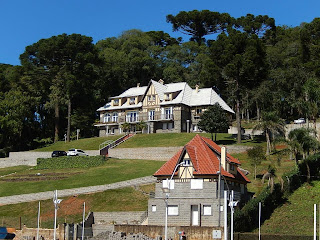
Hello, Fraiburgo
We met our host families and transferred the luggage to cars before boarding Fraiburgo's version of a duckboat on steroids (Boston Strong!).  This all-terrain vehicle took us on thrill inducing tour of Renar Forest.


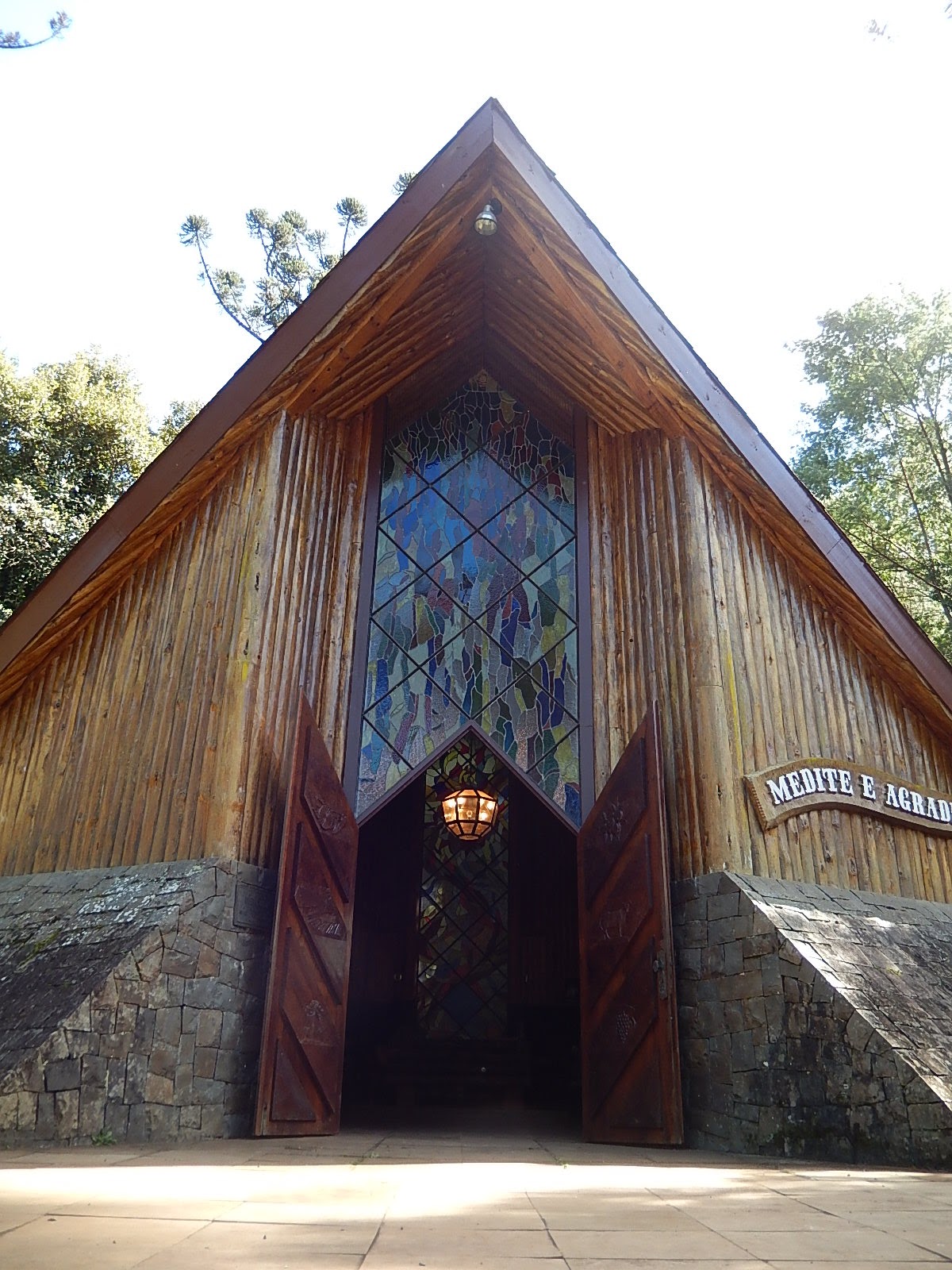
Deep in the forest, our first stop was an ecumenical church, gifted to the Frei on his 80th birthday by the architect.  The walls are crafted of reforested pine, held together not by nails, but by a Japanese method of piecing and locking the wood together; the bottom of the walls is volcanic rock from the region.  Mass is not held in this church, but many use it for weddings.
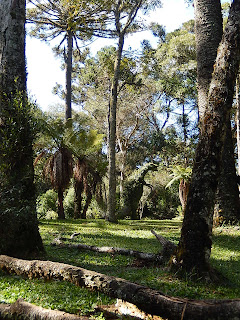


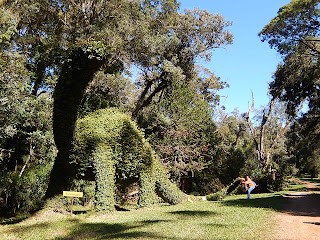
Our version of gorillas in the mist: dinosaurs in the jungle
Chris, you cant get that through TSA
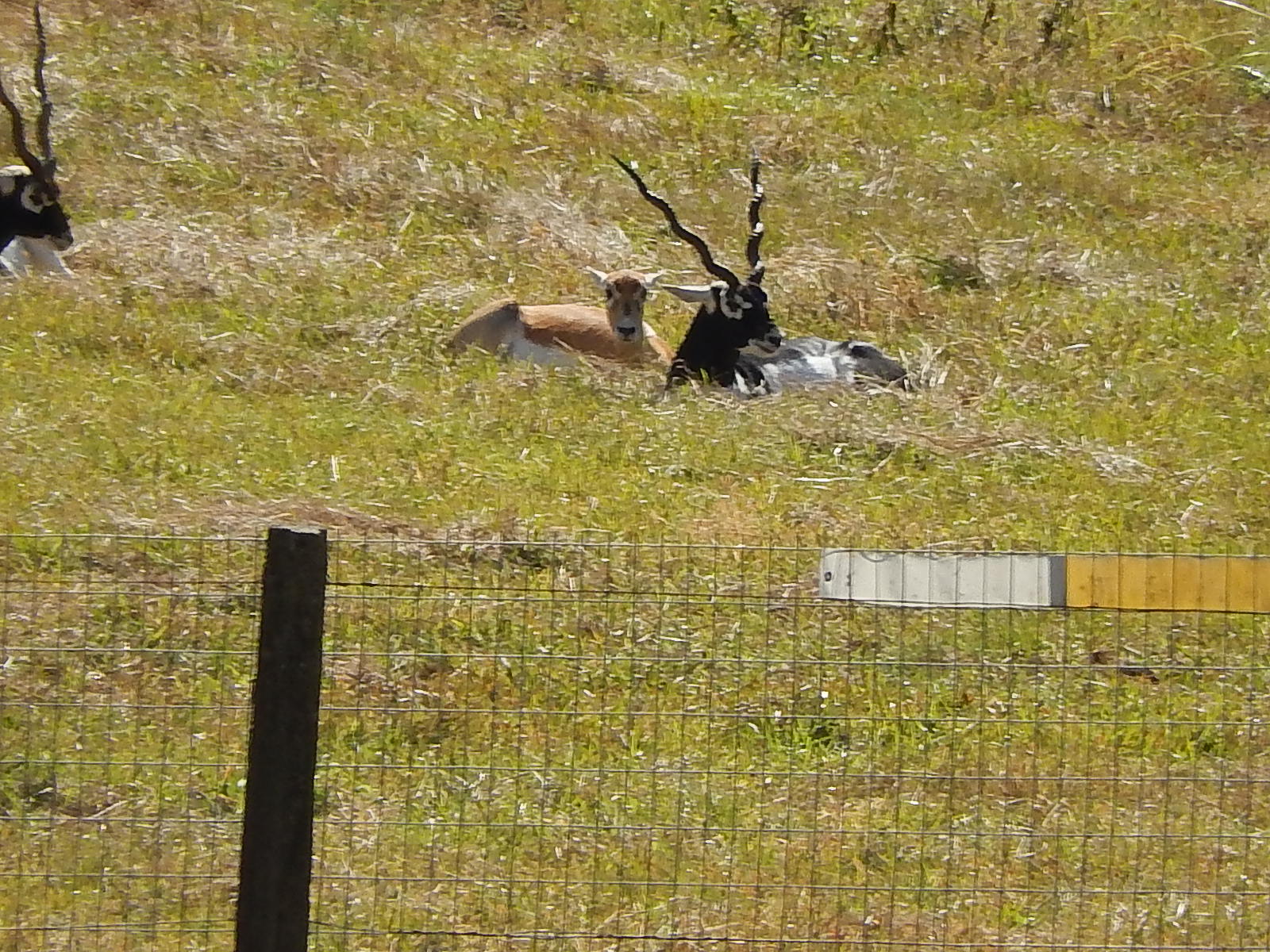
Back on the mammoth "bus", we headed over to the farm, where we found ducks, sheep, deer, bucks, and African antelope.  If the antelope get frightened, they can jump 3 meters in the air!
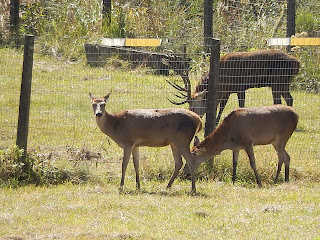
You mess with the bull, you get the horns


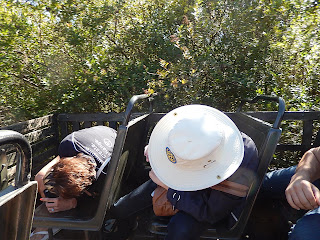
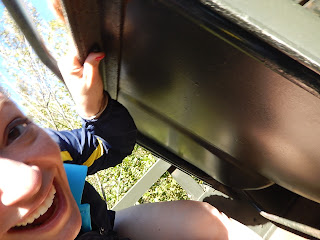
I think the driver enjoyed hearing our screams as he drove through lakes, down incredibly steep hills at lightening speed, and through trees, causing us to hit the deck, lest we lose our heads.  Three new words for today: cuidado (careful!), segura firme (hold tightly!), and abaixa (duck!).
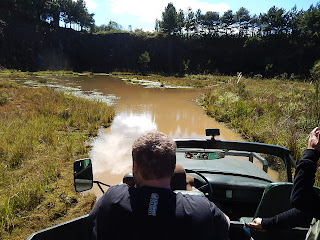
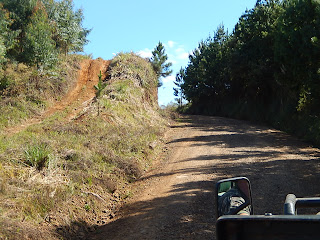
Yes, we went THROUGH this
And down this
Abaixa!
Abaixa!
After lunch with our host families, we headed to Grupo Fisher which is one of the largest apple producing plants in the region.  95% of their product is fuji or gala; Brazilians don't like green fruit.  They harvest the product during January, February, March, and some of April, but have to keep and sell product year-round.  Using controlled atmospere storage, they can keep Gala apples fresh until September (about 6 months) and Fuji until January 2014 (12 months).  Using 120-130 small growers plus their own crop, they process and sell 120,000 tons of apples annually.  They are focused primarily on supplying the Brazilian market, alhough they export about 5% of their product to India, China, and the middle east.  Interestingly enough though, 99% of their apple juice is exported.  In addition to apples, Fisher also processes kiwi, although in a much smaller quantity (1,000 tons annually - however, last year due to frost, they only produced 80 tons).


Sorting the apples by hand

This factory had recently added a news machine which dramatically increased speed and analytics while automating the process.  As the apples went through the machine, 70 images were taken of each apple, regisering a comprehensive analysis and assessment of each fruit's size, weight, defects, color, etc.


Photographing the apples

With this information, the machine was able to categorize each apple into 12 different size categories and 3 different classes for uniformity of product and packaging.  The sales team then sells the 36 different products to businesses based on market segmentation (ATTN:marketing dork alert).  For example, Americans tend to like bigger apples and have the money to pay for class 1 quality.  On the other hand, India and China tend to purchase the smaller apples and class 2 or class 3 quality because a) these apples are cheaper and b) you will get more apples per kilo.
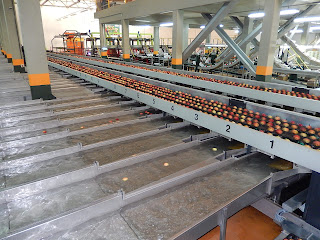

The apples are being categorized into one of 36 different groupings

Sizes and classes together

To geek out on you once more with Fisher's marketing prowess, we learned that historically, Brazilians don't buy bagged fruit, as was learned when a competitor tried and went under in the process.  Fisher, seeing the opportunity, purchased the equipment to bag the apples, partnered with a popular Brazilian comic (Archie and Jughead comic, not Jerry Seinfeld comic), and now sell more of Turma de Monica (Monica's gang) bagged apples than any other product on their line.  Incluing all their apple products, they produce 2,000 boxes/hour for 20 hours/day, thereby selling 5-5.5MM boxes/year.

Monica apples!

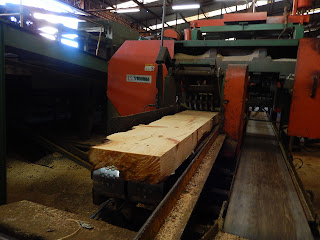
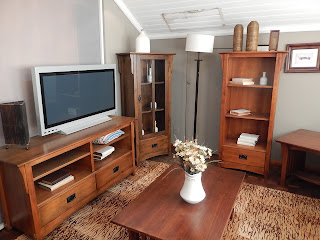
After tasting the product at the end of our tour, we headed to Renar Moveis, a furniture producer that sells both in Brazil and in the US (in fact, the owner's brother was in High Point, NC while we walked through the factory!).  Using the American pine tree, harvested from around the region, they cut, process, produce and sell gorgeous wooden bedroom, dining room, and living room furniture.
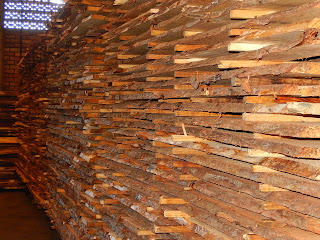
Cut wood, ready for production
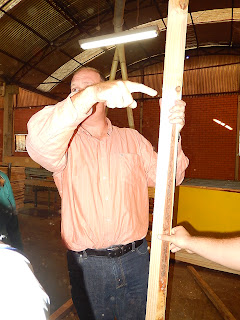
Sizing the pine
Roberto Frey, co-owner of Renar Movies

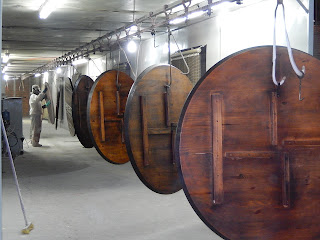
Staining the dining room tables

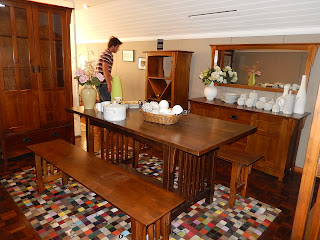
Renar's showroom (hi, Sebastian!)

Yes, please :)

If you see Brazilian Furniture Group (BFGRoberto Frey, thates, check it out!

Wednesday, April 24, 2013

SUNDAY FUN DAY

NOTHING BUT SMILES AND LAUGHS
DATE: Sunday, April 21, 2013
LOCATION: Cacador

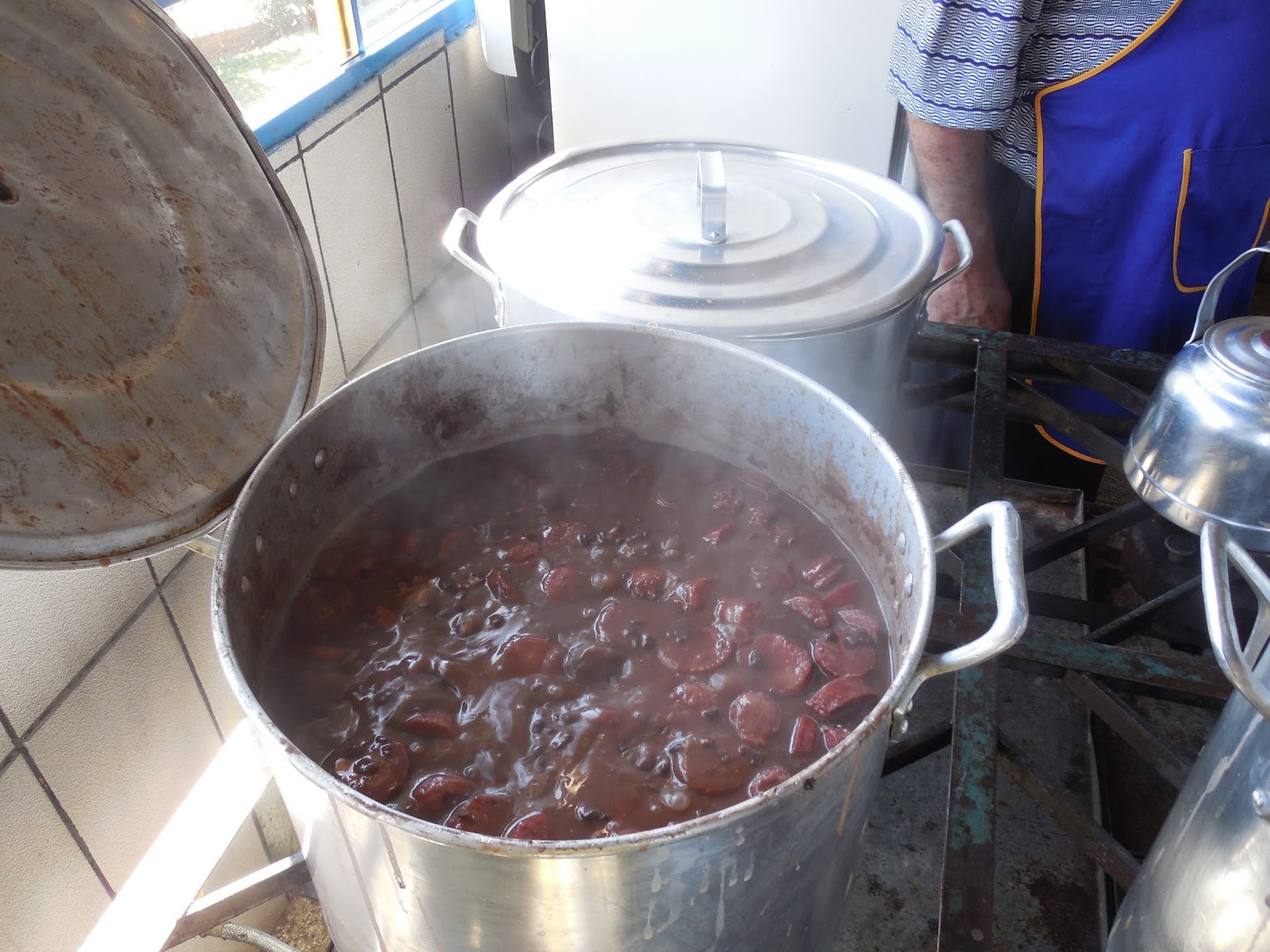
Today was full of sun, smiles, and good times. Since our presentation was the only thing really on the agenda for today, we were able to sleep in late, which everyone on the team was happy about. After being picked up at the hotel we headed to the local Rotary hall. Clori had advised us yesterday that the menu for the day was going to be very simple consisting of tomatoes, some sort of salads and fruit, and the main dish, fejuada. Fejuada is a regional favorite and is white rice with black beans. However, the black beans has different pieces of pork in it. Even though I am not a fan of pork I must say that the fejuada was terrific. Two platoes Christopher even made an appearance. Before we could dig into that tasty meal that the Cacador clubs had prepared for us we had to do our presentation. SHOWTIME!!! The presentation was well received by the clubs and the audience members had several questions for us in the question and answer portion of our program. After the presentation, we all toasted to the "Old North State" and dug into the southern Brazilian cuisine. They even turned on some Brazilian music and some of us made some new friends.


Notice that the men are the only one's in the kitchen


The black beans for the fresjoada

Claudio and Vilma

Erin, Clori, and me

Our team and the local Rotarians

Fejuada with a green salad, tomatoes, and an orange

Clori's wife

Vilma and Claudio

Lucas, his mother, and me

Lucas's little sister and Erin

Meet my new little dancing partner


Salute


Once our festive presentation program was complete, a number of us decided to head to the local park and try to work of the fejuada. Actually, I think it was more to work of the wine and alcohol that the bartender was pouring, but I digress. Cacador has beautiful green area in the city and they cut it off to traffic from Saturday to Monday morning. This way the residence can play openly without the worry of getting struck by one of the crazy Brazilian drivers. There were tons of people in the park, playing regular soccer and sand soccer, basketball, running around the .75 mile track, taking in the different vendors, and just relaxing with their families. It was a beautiful sight. I decided to play basketball with some local guys (including Everton, Rodrigo, and apparently word gets around town quick that there are five people from Estados Unidos in town. One of the guys even knew my name before I could even introduce myself. As our team says, if you did not know by now, "we are famous in Brazil"!!!!!!!!


Our night cap involved a wonderful dinner at a place called Supreme Pizza. The pizza was wonderful and as usual the girls really enjoyed the sweat pizza with chocolate and strawberrys. Overall, the day was lovely